
Galileo
A new rock musical about the astronomer Galileo Galilei
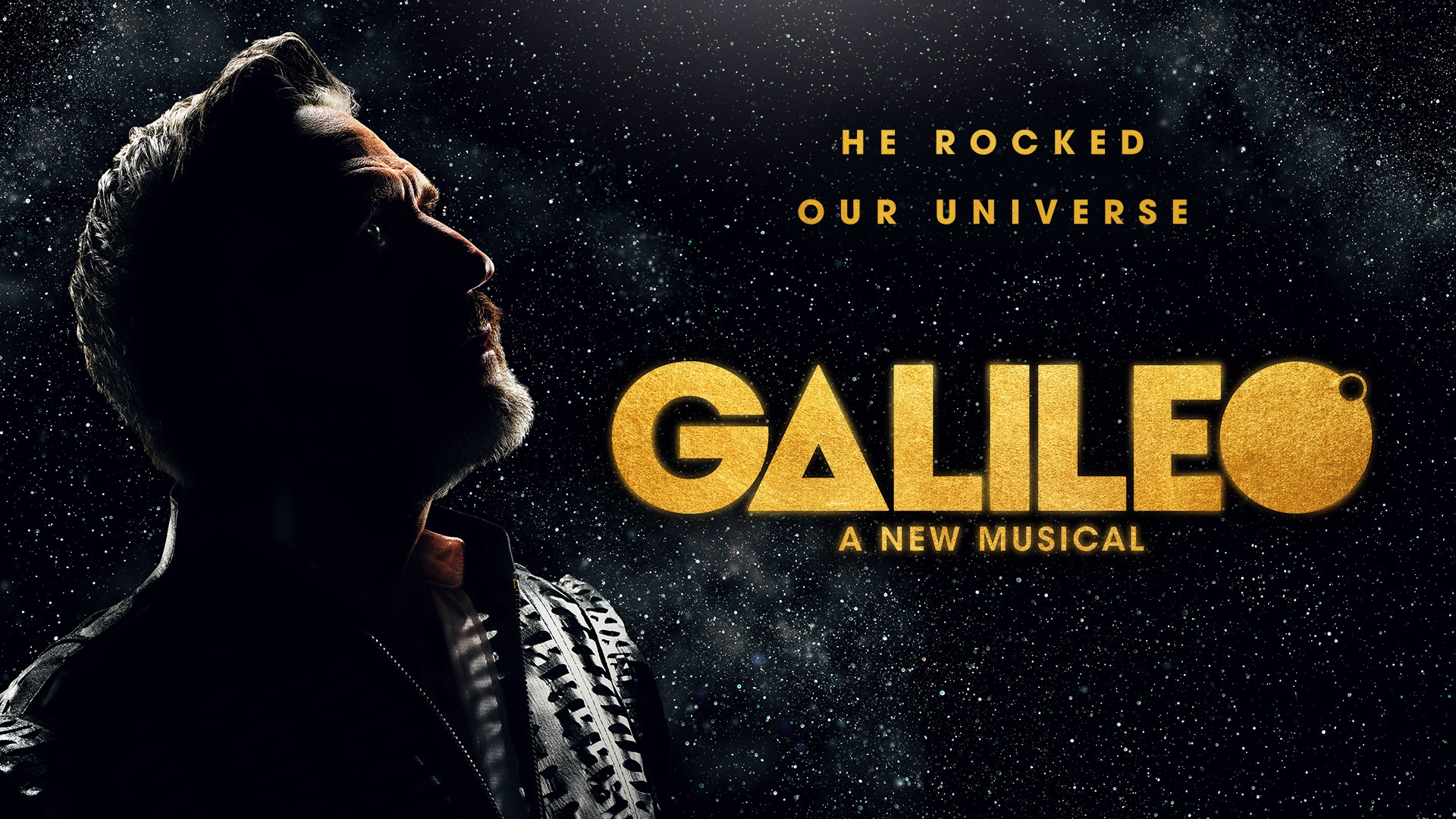
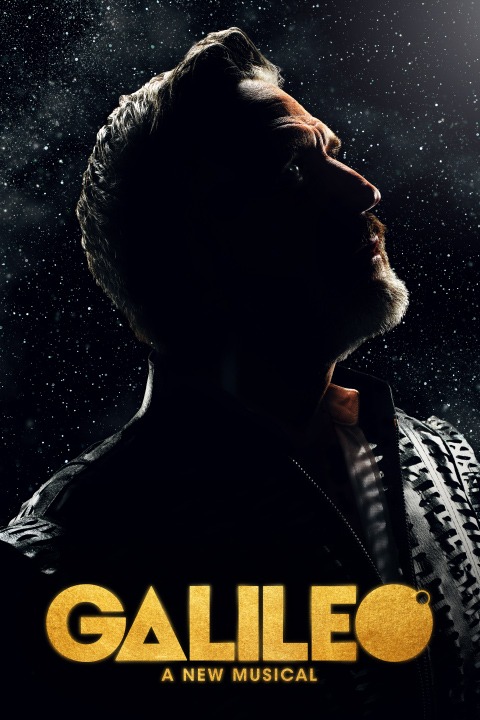
A new rock musical about Galileo Galilei: his telescope sets him against the church and his old friend, the future Pope Urban VIII, while he fights for his gifted daughter's future.
Quick take
- Musical
- 1 intermission
- Shubert Theatre
- Ages 10+
- Opens Dec 6
- Based on the life of the astronomer Galileo Galilei
Galileo showtimes
All times Eastern. Schedule last checked Nov 7
- 8:00 PMEvening
- 8:00 PMEvening
- 8:00 PMEvening
- 8:00 PMEvening
- 8:00 PMEvening
- 8:00 PMEvening
- 8:00 PMEvening
- 2:00 PMMatinee
Our guide to Galileo
On this page 10 sections
What it is
Galileo is a new rock musical about Galileo Galilei, the Italian astronomer whose telescope set him against the Catholic Church in the 17th century. The show tells that story through three people who are bound together and then pulled apart by the conflict: Galileo; his close friend Maffeo Barberini, a churchman rising toward the papacy; and his daughter Virginia, who shares her father's mind but not his freedom.
The book is by Danny Strong, with music and lyrics by Zoe Sarnak and Michael Weiner and direction by Michael Mayer. The plot is an original one rather than an adaptation of Brecht's play Life of Galileo or any other single source: the writers build their own drama out of the known record of the Galileo affair.
This is a new musical rather than a revival. It comes to the Shubert Theatre from Berkeley Repertory Theatre in California, where it was developed and first staged in 2024 under the title Galileo: A Rock Musical. Much of that creative team, and several of the original actors, came east with it.
The story
As the curtain rises, Galileo is a 45-year-old scholar who already doubts the church's teaching that Earth sits at the center of creation; like Copernicus, he suspects otherwise. Then he builds a better telescope, aims it upward and finds new detail on the moon and far beyond it. Europe is thrilled. The church takes notice.
Two people stand closest to him. Barberini is his trusted confidant, a bishop whose career keeps climbing until he becomes Pope Urban VIII. Virginia is quick and gifted, and her father has taught her his sciences, yet as a woman she is shut out of the professions open to him. Born outside marriage, she has few prospects for love, and the convent looms. Galileo wants a better future for her. A neighbor, Alessandro Tarantola, loves Virginia and hopes to make her his wife.
Rome summons him. Galileo must answer for his findings before church authorities who are themselves facing a revolt, while religious war spreads through Europe. Senior clergy such as Cardinal Morosini and Bishop Grasso treat any challenge to Scripture as an attack. Ordered to stop teaching Copernicus, Galileo keeps going, and churchmen fear his ideas could aid the Protestants that Catholic armies are fighting in the north. As faith, ambition and love drive the three central characters apart, each has to choose what to sacrifice.
Much of this outline comes from the 2024 Berkeley version, and the script may have changed for Broadway.
A little real history helps. Galileo was born in Pisa in 1564. Copernicus had put the sun at the center in De revolutionibus in 1543, and in 1600 the philosopher Giordano Bruno, who pushed the Copernican picture further, was executed in Rome after a heresy trial. In 1610 Galileo published Sidereus Nuncius (Starry Messenger), a report on what his telescope had revealed. Over time his observations included Jupiter's four largest moons, the phases of Venus, lunar craters and sunspots. In 1616 the Inquisition ruled heliocentrism heretical. Barberini was pope from 1623 until 1644, years that overlapped the Thirty Years' War.
The music
Sarnak and Weiner wrote the music and lyrics together and share credit for the arrangements. The show is billed as a rock musical and has also been described as a biographical rock opera. Either way, the score is original rock music, set against a story from the 1600s.
Brian Usifer is the music supervisor and orchestrator. In Berkeley, an eight-piece pit band played the score under music director Roberto Sinha.
In September 2026, three numbers from the Broadway score were sung in public, one by each of the leads:
- "Heaven's Changing" is Galileo's solo.
- "Limited Life" belongs to Virginia, the only woman among the principal characters.
- "Power & The Glory" is Barberini's number with the full company; in Berkeley it came in the second act under a slightly longer title.
The production
Mayer, Neumann, Usifer, Hauck, Adams and Shivers all return from the 2024 premiere. Hilferty and Tobman join for Broadway, taking over costumes and projections from the Berkeley designers.
In Berkeley, the set was a two-level structure traced in LED light that could read as a university hall one moment and a church interior the next, with projected images drawn from religion, science and the night sky.
As of October 2026, the Broadway company is led by Raúl Esparza as Galileo Galilei, Jeremy Kushnier as Bishop Maffeo Barberini and Joy Woods as Virginia Galilei. Javier Muñoz plays Cardinal Morosini, Bradley Dean plays Bishop Grasso, and Jordon Lee Garcia makes his Broadway debut as Alessandro Tarantola. Michael Park is the alternate Galileo. Esparza, Kushnier, Muñoz and Dean all played the same parts in Berkeley, where Dean was also the alternate Galileo.
Esparza is a four-time Tony nominee, with nominations in all four acting categories for Taboo, Company, The Homecoming and Speed-the-Plow; television viewers know him as ADA Rafael Barba on Law & Order: Special Victims Unit. He had not been seen on Broadway since Leap of Faith in 2012. Woods was nominated for a Tony and a Grammy as Louise in the 2024 Gypsy revival. Kushnier's Broadway roles include Roger in Rent and Tommy DeVito in Jersey Boys. Muñoz took on the title role in the original Broadway company of Hamilton, and Park was the first Larry Murphy in Dear Evan Hansen.
History
In June 2019, Esparza led a one-performance workshop reading of the show at Vassar College in Poughkeepsie, New York. In 2023 his casting in a Berkeley Rep world premiere, planned for summer 2024, was made public.
That production opened officially on May 15, 2024, in Berkeley Rep's 573-seat Roda Theatre, and its run was extended through June 23, 2024. Berkeley Rep presented it by special arrangement with Jordan Roth, later one of the Broadway producers, and Key to the City Productions.
On February 10, 2026, Lipitz, Tisch and Roth announced the Broadway run at the Shubert Theatre. The same day, Mayer presented the show at a Broadway Across America conference in Miami, where former astronaut Mae Jemison introduced a showcase of songs from the score. At the time, the Shubert was still home to Hell's Kitchen, the Alicia Keys musical, which played there until February 22, 2026.
Dean, Garcia, Muñoz and Park were added to the company on September 2, 2026, and the full cast was announced on September 14. Ten days later, Esparza, Woods, Kushnier and the company sang three numbers at Edge NYC, the observation deck with a glass floor 100 stories above Hudson Yards.
As of October 2026, previews are set to begin on November 10, 2026, with opening night on Sunday, December 6, 2026.
The ending (spoilers)Contains spoilers. Tap to read
History supplies the outline. In 1632 Galileo's book Dialogue Concerning the Two Chief World Systems weighed the Copernican model against the older Ptolemaic one, and Urban VIII, once his patron, turned on him. In 1633 the Roman Inquisition put him on trial, made him recant and kept him under house arrest until his death in 1642. Virginia, by then the nun Sister Maria Celeste, died in 1634; 124 of her letters to her father survive.
The Berkeley version followed the same arc: the book that sets the two systems side by side offends the pope and brings Galileo down, and the finale returns the ensemble in modern dress. The Broadway ending may differ in its details.
Awards
So far the honors belong to the Berkeley staging. When the San Francisco Bay Area Theatre Critics Circle handed out its 48th annual awards on March 31, 2025, at San Francisco's Victoria Theatre, covering the 2024 season, Galileo took six prizes from 16 nominations. The wins included Best Production, Best Principal Performance for Raúl Esparza and Best Original Music for Michael Weiner and Zoe Sarnak, plus design awards for Kevin Adams (lighting), John Shivers (sound) and Anita Yavich (costumes).
Strong, Mayer, Neumann and Hauck were among the other nominees, as were Kushnier, Dean and Madalynn Mathews, who was Virginia in Berkeley. As of October 2026, the Broadway production had not opened and had no awards of its own.
| Year | Award | Category | Result |
|---|---|---|---|
| 2025 | Other award | San Francisco Bay Area Theatre Critics Circle Award: Best Costume DesignAnita Yavich | Won |
| 2025 | Other award | San Francisco Bay Area Theatre Critics Circle Award: Best Lighting DesignKevin Adams | Won |
| 2025 | Other award | San Francisco Bay Area Theatre Critics Circle Award: Best Original MusicMichael Weiner and Zoe Sarnak | Won |
| 2025 | Other award | San Francisco Bay Area Theatre Critics Circle Award: Best Principal PerformanceRaúl Esparza | Won |
| 2025 | Other award | San Francisco Bay Area Theatre Critics Circle Award: Best Production | Won |
| 2025 | Other award | San Francisco Bay Area Theatre Critics Circle Award: Best Sound DesignJohn Shivers | Won |
| 2025 | Other award | San Francisco Bay Area Theatre Critics Circle Award: Best ChoreographyDavid Neumann | Nominated |
| 2025 | Other award | San Francisco Bay Area Theatre Critics Circle Award: Best Featured PerformanceJeremy Kushnier | Nominated |
| 2025 | Other award | San Francisco Bay Area Theatre Critics Circle Award: Best Featured PerformanceBradley Dean | Nominated |
| 2025 | Other award | San Francisco Bay Area Theatre Critics Circle Award: Best Music DirectionRoberto Sinha | Nominated |
| 2025 | Other award | San Francisco Bay Area Theatre Critics Circle Award: Best Original ScriptDanny Strong | Nominated |
| 2025 | Other award | San Francisco Bay Area Theatre Critics Circle Award: Best Principal PerformanceMadalynn Mathews | Nominated |
Show all 16 awards and nominations
| Year | Award | Category | Result |
|---|---|---|---|
| 2025 | Other award | San Francisco Bay Area Theatre Critics Circle Award: Best Projection DesignJason H. Thompson and Kaitlyn Pietras | Nominated |
| 2025 | Other award | San Francisco Bay Area Theatre Critics Circle Award: Best Set DesignRachel Hauck | Nominated |
| 2025 | Other award | San Francisco Bay Area Theatre Critics Circle Award: Best Specialties DesignTom Watson | Nominated |
| 2025 | Other award | San Francisco Bay Area Theatre Critics Circle Award: Best Stage DirectionMichael Mayer | Nominated |
Creative team & cast
Creative team
Danny Strong, author of the book, is a two-time Emmy winner who created Dopesick for Hulu and co-created Empire for Fox; his film scripts include Recount, Game Change and The Butler. His Broadway credits include a new book for the Chess revival at the Imperial Theatre in fall 2025.
Zoe Sarnak is a Drama Desk nominee and Larson Award winner whose work includes The Lonely Few and Empire Records. Michael Weiner co-wrote the score of First Date, which played the Longacre Theatre; his other stage projects include 13 Going on 30.
Michael Mayer is a Tony-winning director whose Broadway credits include Spring Awakening, American Idiot, Hedwig and the Angry Inch, the 2022 Funny Girl and the 2025 Chess. He has taken this route before: American Idiot also started at Berkeley Rep before Broadway. Choreographer David Neumann, a Tony nominee, won a Chita Rivera Award for Hadestown and choreographed Swept Away on Broadway.
The designers include several Tony winners. Rachel Hauck, honored for the Hadestown set, designs the scenery; Susan Hilferty, honored for the Wicked costumes, designs the costumes; and Kevin Adams, whose lighting Tonys include Spring Awakening and The 39 Steps, lights the show. John Shivers designs the sound. Ethan Tobman, creative director of Taylor Swift's The Eras Tour, makes his Broadway debut as video and projection designer. Casting is by Jim Carnahan and Jason Thinger, and the producers are Amanda Lipitz, Henry Tisch and Jordan Roth.


- Book
- Danny Strong
- Music & Lyrics
- Zoe Sarnak, Michael Weiner
- Director
- Michael Mayer
- Choreographer
- David Neumann
- Music Supervisor
- Brian Usifer
- Orchestrations
- Brian Usifer
- Arrangements
- Zoe Sarnak, Michael Weiner
- Scenic Design
- Rachel Hauck
- Costume Design
- Susan Hilferty
- Lighting Design
- Kevin Adams
- Sound Design
- John Shivers
- Projection Design
- Ethan Tobman
More production credits (3)
- Casting
- Jim Carnahan, Jason Thinger
- Dance Captain
- Michał Kołaczkowski
- Producer
- Amanda Lipitz, Henry Tisch, Jordan Roth
Cast
As of October 2026. Casts change during a run, and understudies may appear at any performance.


- Galileo Galilei
- Raúl Esparza
- Bishop Maffeo Barberini
- Jeremy Kushnier
- Virginia Galilei
- Joy Woods
- Bishop Grasso
- Bradley Dean
- Alessandro Tarantola
- Jordon Lee Garcia
- Cardinal Morosini
- Javier Muñoz
Ensemble, swings and understudies (20)
- Galileo Galilei (alternate)
- Michael Park
- Ensemble
- Gabrielle Elisabeth, Adam Halpin, Nicole Kyoung-Mi Lambert, Rico LeBron, Michael J. Mainwaring, Terica Marie, Rob Marnell, Alexander Mendoza, Ramone Nelson, Matty Palmer, Chase Peacock, David Rowen, Madeleine Spacapan, Erica Sweany
- Swing
- Nicci Claspell, Ninako Donville, Cameron Johnson, Michał Kołaczkowski, Noah Plomgren
Photo credits (5)
- Michael Mayer: Montclair Film, CC BY 2.0
- David Neumann: Casey "Poppins" Nedelka, CC BY-SA 4.0
- Rachel Hauck: PhilipRomanoPhoto, CC BY-SA 4.0
- Raúl Esparza: Bryan Berlin, CC BY-SA 4.0
- Javier Muñoz: PhilipRomanoPhoto, CC BY 4.0
Theater
Shubert Theatre
225 West 44th Street, New York, NY 10036
1,460 seats · opened 1913
The Shubert is the flagship house of the Shubert Organization, which operates it and keeps its executive offices on the floors above the auditorium. It stands on West 44th Street at the corner of Shubert Alley, on the Theater District block with more Broadway stages than any other, and seats about 1,460 people on three levels. Since the 1970s it has housed a string of long-running musicals.
Getting there
The theater is at 225 West 44th Street, between Broadway and Eighth Avenue, near Times Square. Sardi's faces it across the street, One Astor Plaza, home of the Minskoff Theatre, stands across the alley, and the Booth, Majestic and Broadhurst are its neighbors. Its gold stage door opens onto Shubert Alley.
The nearest subway stairs are at Eighth Avenue and 44th Street, for the A, C and E trains at 42nd Street-Port Authority Bus Terminal; the southwest corner has a wheelchair lift to an elevator. A free transfer, not wheelchair accessible, leads to Times Square-42nd Street, where the 1, 2, 3, 7, N, Q, R and W stop along with the shuttle, though not all of them around the clock. Farther north are 49th Street (N, R, W) and 50th Street on Eighth Avenue (C, E).
Open in Apple Maps (opens in a new tab)Open in Google Maps (opens in a new tab)

Photo: Mademoiselle Sabina, CC BY-SA 2.5
Questions about Galileo
Does Galileo have an intermission?
What age is Galileo suitable for?
Where is Galileo playing?
When does Galileo open?
How much are tickets to Galileo?
Before or after the show
- Museum of Broadway
- Hell's Kitchen food tour before the show
- Empire State Building observation deck
- SUMMIT One Vanderbilt
- Statue of Liberty and Ellis Island ferry
More Broadway musicals


Spotted an error on this page? Tell us and we will fix it.