
Chicago
Winner of six Tony Awards, on Broadway since 1996
Kander and Ebb's jazz-age satire about two accused murderers in 1920s Chicago and the lawyer who makes them famous, in a revival running on Broadway since 1996.
Quick take
- Musical
- 2h 30m · 1 intermission
- Ambassador Theatre
- Ages 13+
- Opened 1996
- Winner of 6 Tony Awards in 1997, including Best Revival of a Musical
- Based on the 1926 play Chicago by Maurine Dallas Watkins
- A revival: the musical was first staged in 1975
- 8 performances a week
Chicago showtimes
All times Eastern. Schedule last checked Nov 7
- 2:00 PMMatineeTomorrow
- 7:00 PMEveningTomorrow
- 7:00 PMEvening
- 7:00 PMEvening
- 7:00 PMEvening
- 8:00 PMEvening
- 2:30 PMMatinee
- 8:00 PMEvening
Our guide to Chicago
On this page 10 sections
What it is
Chicago is a musical satire about two women charged with murder in Jazz Age Chicago and the lawyer, reporters and jail matron who help turn them into celebrities. Its targets are a justice system that can be bought and a public that treats a killing as entertainment. John Kander wrote the music, Fred Ebb wrote the lyrics, and Ebb and Bob Fosse wrote the book. The source is the 1926 play Chicago by Maurine Dallas Watkins, a reporter who had covered real murder trials in the city.
The show at the Ambassador Theatre is not the original 1975 staging. It is the revival that opened on November 14, 1996, after starting life earlier that year as a pared-down concert performance, and it still keeps much of that bare look. In 1997 it won six Tony Awards, among them Best Revival of a Musical.
As of October 2026, Chicago is the longest-running show now playing on Broadway, the longest-running American musical in Broadway history and the longest-running musical revival the street has seen. Counting every performance, only The Phantom of the Opera has played more. In 2026 the revival is marking its 30th year on Broadway.
The story
The action is set in Chicago in the late 1920s, and the evening unfolds as a string of vaudeville acts. Velma Kelly, a vaudeville performer, opens the show as a sort of master of ceremonies. Meanwhile, in a cutaway scene, Roxie Hart, a married woman who dreams of a stage career, shoots her lover, Fred Casely, when he tries to break things off.
Roxie talks her husband, Amos, into taking the blame by calling the dead man a burglar. The lie falls apart once the victim is identified, and Roxie lands in the women's block of the Cook County Jail. There she meets the other accused women, among them Velma, who is awaiting trial for killing her husband and her sister, and Matron Mama Morton, who does favors for anyone willing to pay.
Roxie hires Billy Flynn, Velma's lawyer, who has never lost a case and wins by making his clients famous. Amos can cover only half of the fee, so Billy sets out to close the gap by turning her case into a newspaper sensation, with help from Mary Sunshine, a soft-hearted columnist. At a press conference Billy answers every question while Roxie just moves her lips, like a ventriloquist's dummy. Soon she is the talk of the city, and a sidelined Velma proposes a double act. Roxie says no.
When a newer crime pushes her off the front page, Roxie announces that she is pregnant. In the second act the baby story wins the reporters back, Amos stays invisible to everyone, and Roxie grows so sure of her celebrity that she thinks she can manage without Billy. Events inside the jail make her think again, and everything builds toward a trial that Billy runs like a stage show.
The music
Kander and Ebb wrote each number in the style of a traditional vaudeville act or a particular vaudeville star, so the score plays like a bill of variety turns. The original production was even titled Chicago: A Musical Vaudeville. Four of the leads have a specific model: Roxie's material draws on Helen Morgan, Velma's on Texas Guinan, Billy Flynn's on Ted Lewis and Mama Morton's on Sophie Tucker.
Some numbers to listen for:
- "All That Jazz" is Velma's opener, which frames the whole evening as a performance.
- "Cell Block Tango" introduces Roxie to the other accused women of the jail.
- "When You're Good to Mama" is the matron's number, where her terms for help become clear.
- "We Both Reached for the Gun" turns the press conference into a ventriloquist routine.
- "Mister Cellophane" belongs to Amos, the husband nobody notices.
- "Razzle Dazzle" is Billy's number as the trial becomes a show. Its finger snaps were Ebb's idea, added before the song was played for Fosse.
The Overture rewards attention too: it holds fragments of a finale that was cut from the score.
The production
The staging is spare rather than realistic. The musicians are not hidden in a pit: they sit in the middle of the stage on a structure meant to suggest a jury box, and some scenes are played in front of it and on top of it. Chairs stand along both sides of that structure, and performers who are not in a scene wait there in full view. The bare set and simple costumes come straight from the 1996 concert version.
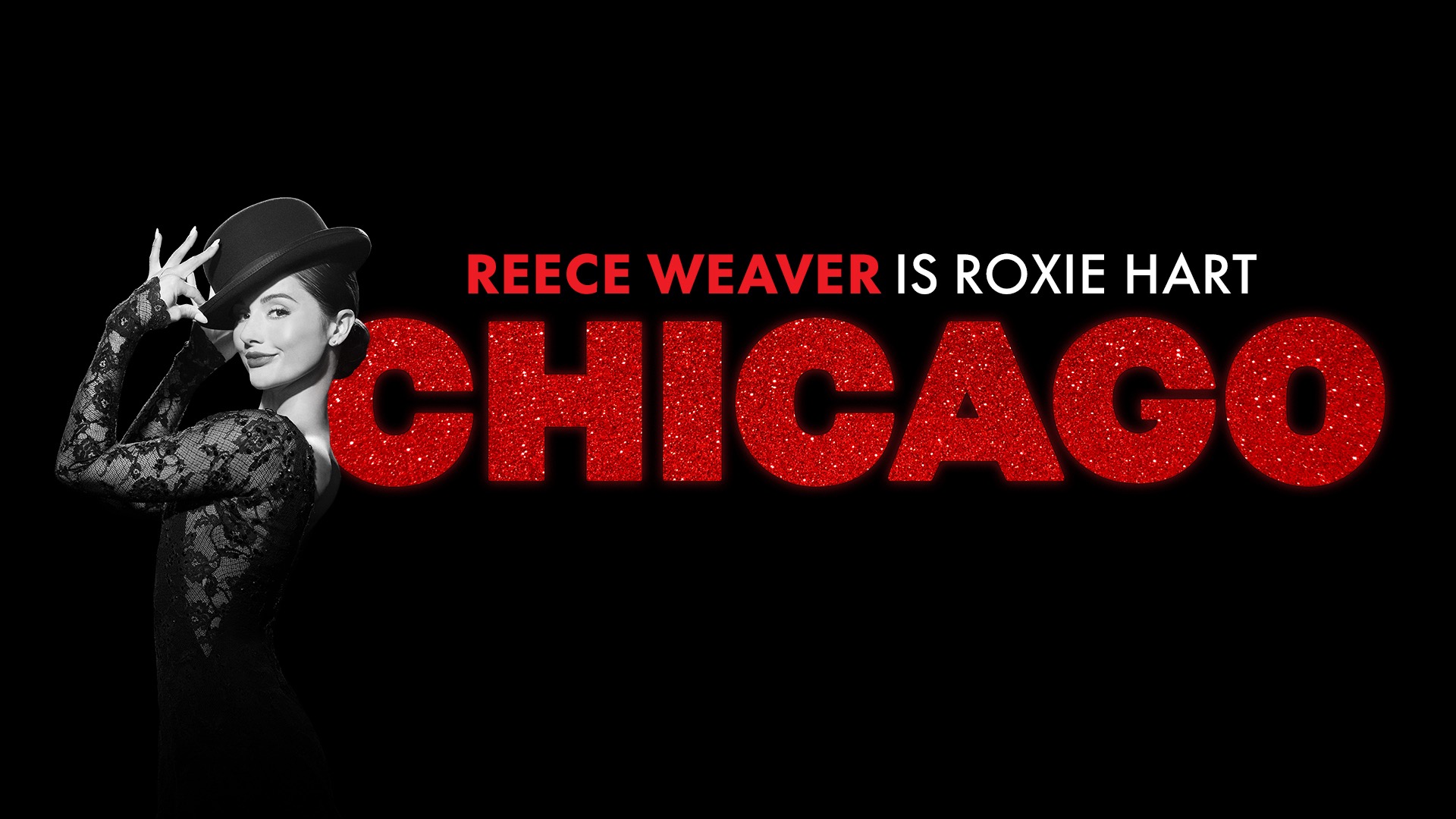
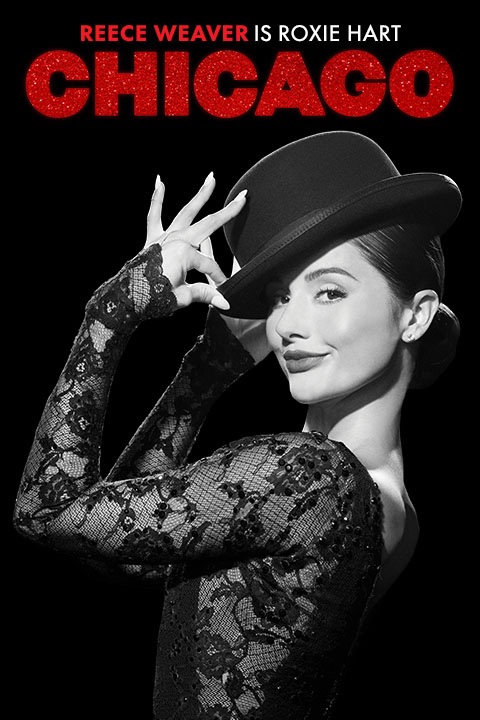
As of October 2026, Max von Essen plays Billy Flynn, Lissa deGuzman plays Velma Kelly, NaTasha Yvette Williams plays Matron Mama Morton and Red Concepción plays Amos Hart. Reece Weaver, known from the Netflix series America's Sweethearts: Dallas Cowboys Cheerleaders, makes her Broadway debut as Roxie Hart in an engagement scheduled through November 15, 2026.
History
The story began in the newspapers. In 1924 two Chicago women, Beulah Annan and Belva Gaertner, were tried for murder in separate cases, and juries acquitted both within days of each other. Maurine Dallas Watkins reported on the trials for the Chicago Tribune and turned her columns into a play. Roxie is modeled on Annan, Velma on Gaertner, a cabaret singer, and Billy Flynn is a blend of two real lawyers. The play opened on Broadway on December 30, 1926, and ran 172 performances; it reached movie screens as a silent film in 1927 and again as Roxie Hart in 1942, with Ginger Rogers.
Gwen Verdon came across the play in the 1960s and suggested it to Fosse as a musical, but Watkins refused to sell the rights; her estate sold them after her death in 1969. Following a Philadelphia tryout at the Forrest Theatre in the spring of 1975, the musical opened on June 3, 1975, at the 46th Street Theatre, now called the Richard Rodgers Theatre. Verdon played Roxie, Chita Rivera played Velma and Jerry Orbach played Billy. Velma, a minor figure in the play, was enlarged so that Rivera and Verdon would be evenly matched. In the summer of 1975 Liza Minnelli stepped in as Roxie for about five weeks while Verdon recovered from throat surgery. The original closed on August 27, 1977, after 936 performances.
In 1992 Rob Marshall staged it for Long Beach Civic Light Opera, with choreography by Ann Reinking. In May 1996 New York's City Center presented a concert version directed by Walter Bobbie and choreographed by Reinking, starring Reinking, Bebe Neuwirth, James Naughton and Joel Grey. That fall the staging moved to Broadway: previews began on October 23, 1996, and the opening came on November 14, 1996, at the Richard Rodgers Theatre, the very house where the 1975 production had played. The revival is reported to have paid back its investment faster than any musical before it.
The production moved to the larger Shubert Theatre on February 12, 1997, and settled at the Ambassador Theatre on January 29, 2003. On November 23, 2014, its 7,486th performance took it past Cats into second place on the all-time Broadway list. It reached its 10,000th Broadway performance in June 2022, and as of October 2026 the count is above 11,000. On June 7, 2026, the 79th Tony Awards at Radio City Music Hall marked the revival's 30th anniversary with a tribute featuring Queen Latifah.
The revival's London staging began at the Adelphi Theatre on November 18, 1997, and played for nearly 15 years across three West End houses; Chicago came back to London at the Phoenix Theatre on April 11, 2018. The revival has also had 10 North American national tours. The 1975 original Broadway cast recording entered the Library of Congress National Recording Registry in 2026. The 2002 film version, directed by Rob Marshall, won the Academy Award for Best Picture.
The ending (spoilers)Contains spoilers. Tap to read
Roxie fires Billy, then watches the Hunyak, a Hungarian inmate who speaks almost no English and insists she is innocent, become the first woman executed in Chicago in decades. Shaken, Roxie goes straight back to her lawyer. At the trial she borrows Velma's own courtroom routine, and the jury acquits her. In most productions the trial also unmasks Mary Sunshine, who turns out to have been played by a man.
Her triumph lasts only moments: a fresher crime breaks, the reporters hurry away, Billy leaves, Roxie admits there never was a baby, and Amos finally walks out. In the closing scene Roxie and Velma, both free, perform "Nowadays" and the "Hot Honey Rag" as a double act, much like the one Velma once proposed.
Songs
24 musical numbers in two acts, in running order.
Act One14 songs
- OvertureOrchestra
- All That JazzVelma and Company
- Funny HoneyRoxie
- Cell Block TangoVelma and the Murderesses
- When You're Good to MamaMama Morton
- Tap DanceRoxie, Amos and Boys
- All I Care AboutBilly Flynn and Girls
- A Little Bit of GoodMary Sunshine
- We Both Reached for the GunBilly, Roxie, Mary Sunshine and the Reporters
- RoxieRoxie and Boys
- I Can't Do It AloneVelma
- I Can't Do It Alone (Reprise)Velma
- My Own Best FriendRoxie and Velma
- All That Jazz (Reprise)Velma
Act Two10 songs
- Entr'acteOrchestra
- I Know a GirlVelma
- Me and My BabyRoxie and Company
- Mister CellophaneAmos
- When Velma Takes the StandVelma and Boys
- Razzle DazzleBilly and Company
- ClassVelma and Mama Morton
- NowadaysVelma and Roxie
- Hot Honey RagOrchestra
- FinaleCompany
Awards
The 1975 original received 11 Tony Award nominations in 1976, including Best Musical and nominations for Verdon, Rivera and Orbach, but won none in the season of A Chorus Line. Jules Fisher did take home a Drama Desk Award for his lighting.
At the 1997 Tony Awards the revival won six of its eight nominations: Best Revival of a Musical, Best Actor in a Musical for James Naughton, Best Actress in a Musical for Bebe Neuwirth, Best Direction of a Musical for Walter Bobbie, Best Choreography for Ann Reinking and Best Lighting Design for Ken Billington. That total is reported to have been a record for a revival until 2008. It also won the Drama Desk Award for Outstanding Revival of a Musical, and the revival album won the Grammy Award for Best Musical Show Album. In London, the 1997 production won the 1998 Laurence Olivier Award for Outstanding Musical Production.
Tony Awards: 6 wins from 19 nominations · Drama Desk Awards: 7 wins from 10 nominations · Outer Critics Circle Awards: 2 wins from 2 nominations · New York Drama Critics' Circle: 1 win from 1 nomination
| Year | Award | Category | Result |
|---|---|---|---|
| 1976 | Tony Award | Best Actor in a MusicalJerry Orbach | Nominated |
| 1976 | Tony Award | Best Actress in a MusicalChita Rivera | Nominated |
| 1976 | Tony Award | Best Actress in a MusicalGwen Verdon | Nominated |
| 1976 | Tony Award | Best Book of a MusicalFred Ebb and Bob Fosse | Nominated |
| 1976 | Tony Award | Best ChoreographyBob Fosse | Nominated |
| 1976 | Tony Award | Best Costume DesignPatricia Zipprodt | Nominated |
| 1976 | Tony Award | Best Direction of a MusicalBob Fosse | Nominated |
| 1976 | Tony Award | Best Lighting DesignJules Fisher | Nominated |
| 1976 | Tony Award | Best Musical | Nominated |
| 1976 | Tony Award | Best Original ScoreJohn Kander and Fred Ebb | Nominated |
| 1976 | Tony Award | Best Scenic DesignTony Walton | Nominated |
| 1997 | Tony Award | Best Actor in a MusicalJames Naughton | Won |
Show all 45 awards and nominations
| Year | Award | Category | Result |
|---|---|---|---|
| 1997 | Tony Award | Best Actress in a MusicalBebe Neuwirth | Won |
| 1997 | Tony Award | Best ChoreographyAnn Reinking | Won |
| 1997 | Tony Award | Best Direction of a MusicalWalter Bobbie | Won |
| 1997 | Tony Award | Best Lighting DesignKen Billington | Won |
| 1997 | Tony Award | Best Revival of a Musical | Won |
| 1997 | Tony Award | Best Costume DesignWilliam Ivey Long | Nominated |
| 1997 | Tony Award | Best Featured Actress in a MusicalMarcia Lewis | Nominated |
| 1976 | Drama Desk Award | Outstanding Lighting DesignJules Fisher | Won |
| 1976 | Drama Desk Award | Outstanding Actor in a MusicalJerry Orbach | Nominated |
| 1997 | Drama Desk Award | Outstanding Actress in a MusicalBebe Neuwirth | Won |
| 1997 | Drama Desk Award | Outstanding ChoreographyAnn Reinking | Won |
| 1997 | Drama Desk Award | Outstanding Director of a MusicalWalter Bobbie | Won |
| 1997 | Drama Desk Award | Outstanding Featured Actor in a MusicalJoel Grey | Won |
| 1997 | Drama Desk Award | Outstanding Lighting DesignKen Billington | Won |
| 1997 | Drama Desk Award | Outstanding Revival of a Musical | Won |
| 1997 | Drama Desk Award | Outstanding Actor in a MusicalJames Naughton | Nominated |
| 1997 | Drama Desk Award | Outstanding Featured Actress in a MusicalMarcia Lewis | Nominated |
| 1997 | Outer Critics Circle Award | Outstanding ChoreographyAnn Reinking | Won |
| 1997 | Outer Critics Circle Award | Outstanding Director of a MusicalWalter Bobbie | Won |
| 1997 | New York Drama Critics' Circle | Special Citation | Won |
| 1976 | Grammy Award | Best Musical Theater Album | Nominated |
| 1998 | Grammy Award | Best Musical Show Album | Won |
| 1999 | Grammy Award | Best Musical Show Album | Nominated |
| 1979 | Laurence Olivier Award | Best Actor in a MusicalBen Cross | Nominated |
| 1979 | Laurence Olivier Award | Best Actress in a MusicalAntonia Ellis | Nominated |
| 1979 | Laurence Olivier Award | Best New Musical | Nominated |
| 1998 | Laurence Olivier Award | Best Actress in a MusicalUte Lemper | Won |
| 1998 | Laurence Olivier Award | Outstanding Musical Production | Won |
| 1998 | Laurence Olivier Award | Best Actor in a MusicalHenry Goodman | Nominated |
| 1998 | Laurence Olivier Award | Best Actress in a MusicalRuthie Henshall | Nominated |
| 1998 | Laurence Olivier Award | Best Costume DesignWilliam Ivey Long | Nominated |
| 1998 | Laurence Olivier Award | Best DirectorWalter Bobbie | Nominated |
| 1998 | Laurence Olivier Award | Best Theatre ChoreographerAnn Reinking | Nominated |
Creative team & cast
Creative team
John Kander and Fred Ebb wrote as the team Kander and Ebb, and Ebb shared the book with Bob Fosse, who directed and choreographed the 1975 production. Walter Bobbie directed the revival and Ann Reinking choreographed it, working in Fosse's style; each won a Tony Award for it. David Thompson adapted the script for the revival.
The designers are John Lee Beatty (sets), William Ivey Long (costumes), Ken Billington (lighting, which won him a Tony) and Scott Lehrer (sound). Ralph Burns wrote the orchestrations, Rob Fisher is the music supervisor and John Bell is the music director. Barry and Fran Weissler produced the revival with Kardana Productions and remain its lead producers. The 1975 original, produced by Robert Fryer and James Cresson, had sets by Tony Walton, costumes by Patricia Zipprodt and lighting by Jules Fisher.


- Book & Lyrics
- Fred Ebb
- Book
- Bob Fosse
- Adaptation
- David Thompson
- Music
- John Kander
- Director
- Walter Bobbie
- Choreographer
- Ann Reinking
- Music Supervisor
- Rob Fisher
- Music Director
- John Bell
- Orchestrations
- Ralph Burns
- Dance Arrangements
- Peter Howard
- Scenic Design
- John Lee Beatty
- Costume Design
- William Ivey Long
- Lighting Design
- Ken Billington
- Sound Design
- Scott Lehrer
More production credits (8)
- Casting
- Duncan Stewart
- Based on the Play by
- Maurine Dallas Watkins
- Original Director & Choreographer
- Bob Fosse
- Dance Supervisor
- Gary Chryst, David Bushman
- Production Stage Manager
- Tripp Phillips
- Executive Producer
- Alecia Parker
- Standby
- Joseph London
- Lead Producer
- Barry Weissler, Fran Weissler
Cast
As of October 2026. Casts change during a run, and understudies may appear at any performance.


- Roxie Hart
- Reece Weaver
- Velma Kelly
- Lissa deGuzman
- Billy Flynn
- Max von Essen
- Matron "Mama" Morton
- NaTasha Yvette Williams
- Amos Hart
- Red Concepción
- Mary Sunshine
- J. Workman
- June
- Tia Altinay
- Doctor/The Judge
- Ronnie S. Bowman Jr.
- Fred Casely
- John Michael Fiumara
- Mona
- Danielle Marie Gonzalez
- Bailiff/Court Clerk
- Christopher Kelley
- Harry/The Jury
- James T. Lane
- Go-To-Hell Kitty
- Jenny Laroche
- Hunyak
- Kristen Faith Oei
- Aaron
- Denny Paschall
- Liz
- Mariah Reives
- Martin Harrison
- Sean Samuels
- Annie
- Samantha Sturm
- Sergeant Fogarty
- Jeff Sullivan
Ensemble, swings and understudies (4)
- Swing
- Austin Dunn, Chelsea James, Marty Lawson, Elizabeth Yanick
Photo credits (5)
- Bob Fosse: Alix Jeffry, Public domain
- John Kander: Kingkongphoto & www.celebrity-photos.com, CC BY-SA 2.0
- John Lee Beatty: Crunklebank, CC BY-SA 4.0
- James T. Lane: Ictenor, CC BY-SA 3.0
- Jenny Laroche: Ddf2011, CC BY-SA 4.0
Theater
Ambassador Theatre
219 West 49th Street, New York, NY 10019
1,114 seats · opened 1921
The Ambassador Theatre is a Broadway house on West 49th Street in the Theater District. It holds 1,114 people, standing room included. The Shubert brothers built it to designs by Herbert J. Krapp, it opened in 1921, and the Shubert Organization owns and runs it today.
Getting there
The theater is at 219 West 49th Street, on the north side of the block between Broadway and Eighth Avenue. The nearest subway stations:
- 49th Street at Seventh Avenue: N at all times, R except late nights, W on weekdays, Q late nights
- 50th Street at Eighth Avenue: E at all times, C except late nights, A late nights
- 50th Street at Broadway: 1 at all times, 2 late nights
On the same block, St. Malachy Roman Catholic Church stands to the west, and the Brill Building holds the Broadway end. The Gershwin Theatre and Circle in the Square are to the north.
Open in Apple Maps (opens in a new tab)Open in Google Maps (opens in a new tab)

Photo: Ajay Suresh, CC BY 2.0
Questions about Chicago
How long is Chicago?
What age is Chicago suitable for?
Where is Chicago playing?
When did Chicago open?
How much are tickets to Chicago?
How many performances a week does Chicago play?
Before or after the show
- Museum of Broadway
- Hell's Kitchen food tour before the show
- Empire State Building observation deck
- SUMMIT One Vanderbilt
- Statue of Liberty and Ellis Island ferry
More Broadway musicals


Spotted an error on this page? Tell us and we will fix it.