
The Sound of Music
Rodgers and Hammerstein's last musical, back on Broadway
Rodgers and Hammerstein's last musical returns to Broadway at Lincoln Center: a postulant becomes governess to seven children in 1938 Salzburg as the Nazis take over Austria.
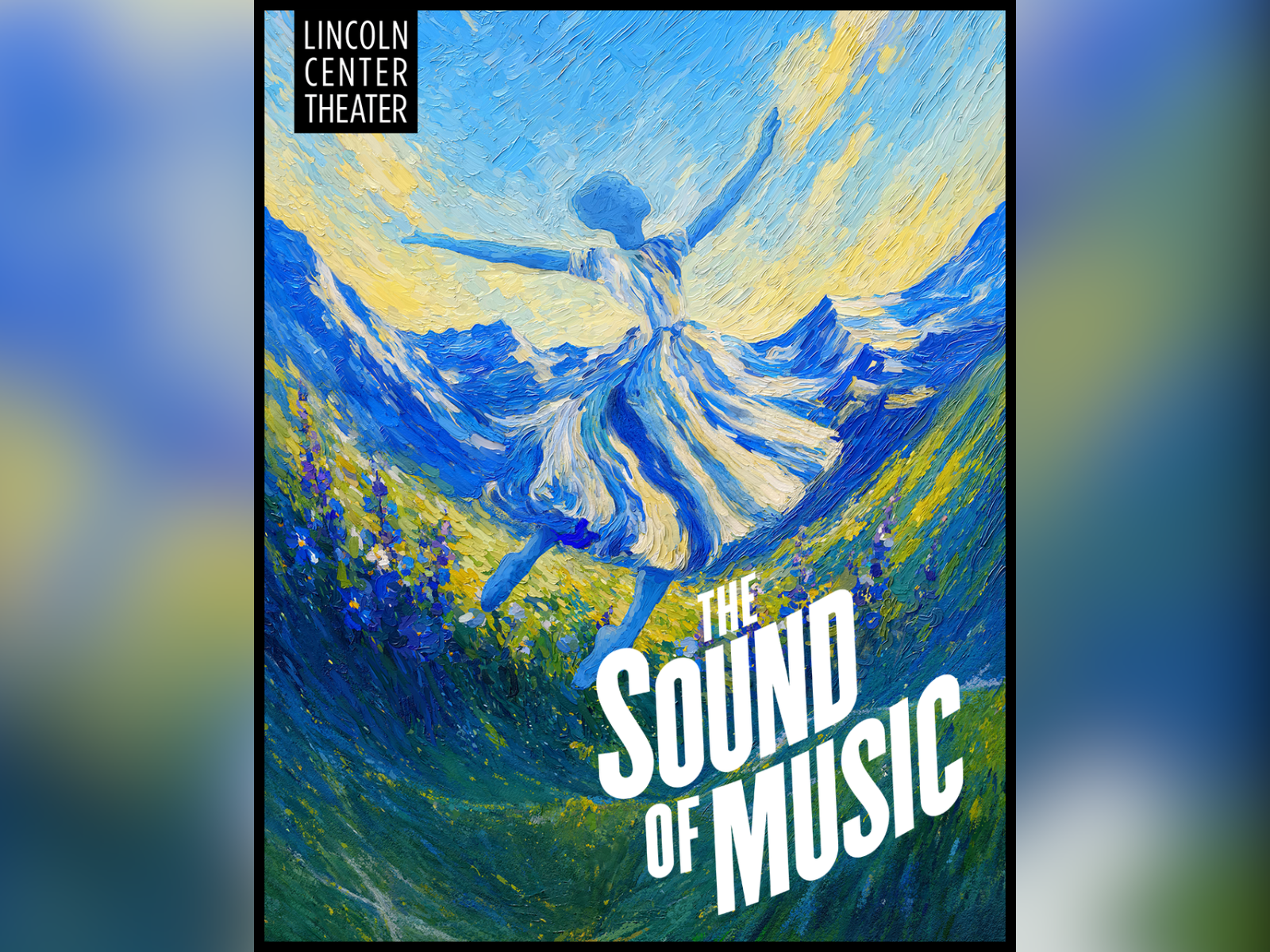
Quick take
- Musical
- 2h 45m · 1 intermission
- Vivian Beaumont Theater
- Ages 5+
- Opens Apr 15, 2027
- Winner of 6 Tony Awards in 1960, including Best Musical
- Based on the 1949 memoir The Story of the Trapp Family Singers by Maria Augusta Trapp
The Sound of Music showtimes
Schedule last checked Nov 7
Performances begin Mar 23, 2027.
Our guide to The Sound of Music
On this page 10 sections
What it is
The Sound of Music is a two-act musical about Maria, a free-spirited postulant in Salzburg, Austria, who becomes governess to a widowed navy captain's seven children in 1938, just before Nazi Germany annexed Austria. Richard Rodgers wrote the music and Oscar Hammerstein II the lyrics; Howard Lindsay and Russel Crouse wrote the book. The show was suggested by Maria Augusta Trapp's 1949 memoir, The Story of the Trapp Family Singers.
This staging is a Broadway revival from Lincoln Center Theater, a nonprofit company, presented at the Vivian Beaumont Theater as part of its 2026–27 season. It is the musical's second Broadway revival, after a 1998 production, and its first return to Broadway in nearly 30 years. Lear deBessonet, the company's artistic director, is directing, and Christopher Gattelli is the choreographer. As of October 2026, Jasmine Amy Rogers has been announced as Maria.
It was the last musical Rodgers and Hammerstein wrote together: Hammerstein died in 1960, nine months after the Broadway opening. The original production won five Tony Awards, including Best Musical, and the 1965 film took Best Picture among its five Academy Awards.
The story
The first act opens at Nonnberg Abbey. Maria Rainer is a lively postulant who cannot stop slipping out to roam the hills, and the Mother Abbess sends her out of the abbey to work as governess at the villa of Captain Georg von Trapp. The Captain, a naval officer and widower, treats his household like a ship's crew and summons his children with a boatswain's whistle. Maria takes the opposite approach, earns the children's trust and gets them singing.
Liesl, the eldest at 16, falls into a romance with Rolf, a young telegram messenger. The Captain arrives home with Baroness Elsa Schraeder, the woman he plans to marry, and his friend Max Detweiler, a music agent busy putting together a festival. When the Captain hears his children sing again, his guard drops, and he asks Maria to stay. Then, at a party, a folk dance with the Captain makes Maria realize what she feels for him. She flees to the abbey, but the Mother Abbess sends her back to the family to face those feelings.
In the second act, politics move into the house. The Captain will not accept the annexation that is coming, his engagement to Elsa falls apart, and he and Maria confess their love and marry. Once the Anschluss has taken place, he is told he must serve as an officer in Germany's navy, and Rolf, it turns out, has joined the Nazis. Max has booked the family to sing at the Kaltzburg Festival, and that concert becomes their cover for a plan to leave Austria.
The music
Every song in the original score was new. The nuns sing liturgical pieces in Latin, starting with the "Preludium" that opens the evening, and the Ländler that Maria and the Captain dance borrows only loosely from the traditional Austrian dance. "Edelweiss" is not an old Austrian song either: it was composed for this musical and became familiar in Austria only after the film came out.
Several numbers became standards. A few to listen for, in the order of the original 1959 production:
- "The Sound of Music": Maria's solo early in the first act.
- "My Favorite Things": first sung by Maria and the Mother Abbess; some productions move it to a thunderstorm scene.
- "Do-Re-Mi": Maria and the children, from the part of the first act in which she teaches them to sing.
- "Sixteen Going on Seventeen": the duet for Liesl and Rolf.
- "Climb Ev'ry Mountain": the Mother Abbess's song that ends the first act and comes back in the finale.
- "Edelweiss": sung by the Captain in the second act.
Stage versions of the score vary. After Hammerstein's death, Rodgers wrote "I Have Confidence" and "Something Good" for the 1965 film, and many stage revivals include them, sometimes with "Something Good" in place of "An Ordinary Couple." As of October 2026, Lincoln Center Theater had not published its song list, so the list on this page follows the original staging.
The production
Lincoln Center Theater has said this revival centers on the von Trapps' private story as a family relearning how to love, with the Nazi rise to power and its creep into daily life as the backdrop. The Beaumont itself is built around a flexible thrust stage, with roughly 1,080 seats rising steeply on two levels in a semicircle, so much of the audience sits to the sides of the stage as well as in front of it.
As of October 2026, Rogers is the only announced cast member. She made her Broadway debut in 2025 in Boop! The Musical, which brought her a Tony nomination for Best Actress in a Musical, along with a Drama Desk Award, an Outer Critics Circle Award and a Theatre World Award.
History
The idea came from director Vincent J. Donehue, who had seen the 1956 West German film The Trapp Family and its 1958 sequel and proposed the story for Mary Martin. The first plan was a play by Lindsay and Crouse built on songs from the Trapp Family Singers' own repertoire; it grew into a full musical with a new score by Rodgers and Hammerstein. Martin's husband, Richard Halliday, produced it with Leland Hayward, and Rodgers and Hammerstein were also credited as producers.
The stage story bends the facts. Maria Augusta Trapp first came to the von Trapp home from Nonnberg Abbey in 1926 to tutor one daughter who was ill, not to take charge of all the children, and she married Georg von Trapp at the abbey in 1927, more than a decade before the Anschluss. The writers also renamed the children, changed their ages and gave Maria the surname Rainer.
After eight tryout performances at the Shubert Theatre in New Haven in October 1959 and a short stop in Boston, the musical reached the Lunt-Fontanne Theatre on Broadway on November 16, 1959. Mary Martin played Maria, Theodore Bikel the Captain and Patricia Neway the Mother Abbess, under Donehue's direction. The original stayed on Broadway until June 15, 1963, switching to the Mark Hellinger Theatre partway through, on November 6, 1962; by its last night it had given 1,443 performances.
Florence Henderson led the first national tour, which began in Detroit on February 27, 1961, and wound up in Toronto in 1963. London's first production, at the Palace Theatre from May 18, 1961, outlasted Broadway's with 2,385 performances, and a 1981 West End revival starring Petula Clark became the first stage version to use the two film songs.
Broadway's first revival opened at the Martin Beck Theatre on March 12, 1998, after previews from February 6, 1998. Susan H. Schulman directed Rebecca Luker as Maria and Michael Siberry as the Captain; Laura Benanti made her Broadway debut as Maria's understudy and later took over the role. It played 533 performances before closing on June 20, 1999. Jack O'Brien later directed two North American tours: one that began in Los Angeles in 2015 and ran until 2017, and another that set out in September 2025 with choreography by Danny Mefford.
The original Broadway cast album, recorded for Columbia Masterworks a week after the 1959 opening, held the top spot on the Billboard albums chart for 16 weeks in 1960. Robert Wise directed the 1965 film for 20th Century Fox, with Christopher Plummer and Julie Andrews in the leads; its soundtrack has sold more than 20 million copies worldwide.
Lincoln Center Theater announced this revival on June 23, 2026, and tickets went on sale on September 17, 2026. The first preview is scheduled for March 23, 2027, and opening night for April 15, 2027, for a limited engagement of 17 weeks.
The ending (spoilers)Contains spoilers. Tap to read
During the festival concert, the von Trapps slip away and hide at the abbey. Rolf finds them there but lets them go, and the family escapes over the mountains on foot. The real family left differently: they took a train to Italy, then moved on to London and finally the United States.
Songs
26 musical numbers in two acts, in running order.
Act One15 songs
- PreludiumMother Abbess, Nuns
- The Sound of MusicMaria
- MariaSister Berthe, Sister Sophia, Sister Margaretta, Mother Abbess
- My Favorite ThingsMaria, Mother Abbess
- My Favorite Things (Reprise)Maria
- Do-Re-MiMaria, Children
- Sixteen Going on SeventeenRolf, Liesl
- The Lonely GoatherdMaria, Children
- The Lonely Goatherd (Reprise)Gretl
- How Can Love SurviveMax, Elsa
- The Sound of Music (Reprise)Maria, the Captain, Children
- LändlerInstrumental
- So Long, FarewellChildren
- Morning HymnNuns
- Climb Ev'ry MountainMother Abbess
Act Two11 songs
- My Favorite Things (Reprise)Maria, Children
- No Way to Stop ItElsa, Max, the Captain
- An Ordinary CoupleMaria, the Captain
- Gaudeamus DominoNuns
- Maria (Reprise)Nuns
- Confitemini DominoNuns
- Sixteen Going on Seventeen (Reprise)Maria, Liesl
- Do-Re-Mi (Reprise)Maria, the Captain, Children
- Edelweissthe Captain
- So Long, Farewell (Reprise)Maria, the Captain, Children
- Finale Ultimo (Climb Ev'ry Mountain)Nuns
Awards
At the 1960 Tony Awards, the original production won five prizes: Best Musical, shared in a tie with Fiorello! and also recorded as an award to the show's producers; Best Actress in a Musical for Mary Martin; Best Featured Actress in a Musical for Patricia Neway; scenic design for Oliver Smith; and conductor and musical director for Frederick Dvonch. One nomination is a curiosity: the seven young actors playing the von Trapp children were nominated together, as one nominee, for Best Featured Actress in a Musical, even though two of them were boys.
Lauri Peters, the original Liesl, received a Theatre World Award, and the cast album won the 1961 Grammy Award for Best Show Album (Original Cast). The 1998 revival was nominated for the Tony Award for Best Revival of a Musical.
Tony Awards: 6 wins from 11 nominations · Drama Desk Awards: 1 nomination · Outer Critics Circle Awards: 4 nominations · Drama League Awards: 1 nomination
| Year | Award | Category | Result |
|---|---|---|---|
| 1960 | Tony Award | Best Actress in a MusicalMary Martin | Won |
| 1960 | Tony Award | Best Conductor and Musical DirectorFrederick Dvonch | Won |
| 1960 | Tony Award | Best Featured Actress in a MusicalPatricia Neway | Won |
| 1960 | Tony Award | Best Musical | Won |
| 1960 | Tony Award | Best Producer of a MusicalLeland Hayward, Richard Halliday, and Rodgers and Hammerstein | Won |
| 1960 | Tony Award | Best Scenic Design of a MusicalOliver Smith | Won |
| 1960 | Tony Award | Best Direction of a MusicalVincent J. Donehue | Nominated |
| 1960 | Tony Award | Best Featured Actor in a MusicalTheodore Bikel | Nominated |
| 1960 | Tony Award | Best Featured Actor in a MusicalKurt Kasznar | Nominated |
| 1960 | Tony Award | Best Featured Actress in a MusicalLauri Peters, Kathy Dunn, Evanna Lien, Mary Susan Locke, Marilyn Rogers, William Snowden and Joseph Stewart | Nominated |
| 1998 | Tony Award | Best Revival of a Musical | Nominated |
| 1998 | Drama Desk Award | Outstanding OrchestrationsBruce Coughlin | Nominated |
Show all 19 awards and nominations
| Year | Award | Category | Result |
|---|---|---|---|
| 1998 | Outer Critics Circle Award | Outstanding Actress in a MusicalRebecca Luker | Nominated |
| 1998 | Outer Critics Circle Award | Outstanding Featured Actress in a MusicalJan Maxwell | Nominated |
| 1998 | Outer Critics Circle Award | Outstanding Revival of a Musical | Nominated |
| 1998 | Outer Critics Circle Award | Outstanding Set DesignHeidi Ettinger | Nominated |
| 1998 | Drama League Award | Distinguished Production of a Revival | Nominated |
| 1960 | Theatre World Award | Theatre World AwardLauri Peters | Won |
| 1961 | Grammy Award | Best Show Album (Original Cast) | Won |
Creative team & cast
Creative team
Rodgers and Hammerstein, who wrote the score, were also the team behind South Pacific and The King and I, two other musicals that Lincoln Center Theater has revived at the Beaumont.
Lear deBessonet directs. She is the Kewsong Lee Artistic Director of Lincoln Center Theater, a post she took up with the 2025–26 season, and a three-time Tony Award nominee. Her earlier work includes the company's revival of Ragtime, which won the 2026 Tony Award for Best Revival of a Musical, and the Broadway revival of Into the Woods.
Christopher Gattelli won the 2012 Tony Award for Best Choreography for Newsies. He was also Tony-nominated for his dances in both of those revivals: South Pacific in 2008 and The King and I in 2015.
Casting is by The Telsey Office. As of October 2026, the set, costume, lighting and sound designers had not been announced.


- Book
- Howard Lindsay, Russel Crouse
- Music
- Richard Rodgers
- Lyrics
- Oscar Hammerstein II
- Director
- Lear deBessonet
- Choreographer
- Christopher Gattelli
More production credits (3)
- Casting
- The Telsey Office
- Source Memoir
- Maria Augusta Trapp
- Lead Producer
- Lincoln Center Theater
Cast
As of October 2026. Casts change during a run, and understudies may appear at any performance.

- Maria
- Jasmine Amy Rogers
Photo credits (6)
- Howard Lindsay: Los Angeles Times, CC BY 4.0
- Richard Rodgers: Al Aumuller, World Telegram staff photographer, Public domain
- Oscar Hammerstein II: Z Arthur printed on photo, Public domain
- Lear deBessonet: PhilipRomano, CC BY-SA 4.0
- Christopher Gattelli: The Tony Awards, CC BY 3.0
- Jasmine Amy Rogers: PhilipRomanoPhoto, CC BY-SA 4.0
Theater
Vivian Beaumont Theater
150 West 65th Street, New York, NY 10023
1,080 seats · opened 1965
The Vivian Beaumont Theater is the one Broadway house you will not find near Times Square. It stands on the Lincoln Center campus on the Upper West Side, under the same roof as the New York Public Library for the Performing Arts; its productions are eligible for Tony Awards. Its roughly 1,080 seats rise steeply in a half-circle around the stage.
Getting there
The address is 150 West 65th Street, New York, NY 10023, between Broadway and Amsterdam Avenue. Walk in at street level on 65th Street or from the plaza near the reflecting pool. The 66th Street-Lincoln Center station, at Broadway, is a 1 train stop (the 2 also calls late at night) and has elevators. The A, B, C, D and 1 lines meet at 59th Street-Columbus Circle, a few blocks away.
Children under 5 are not admitted. Free slim lockers take the place of a coat check, and latecomers wait for a suitable break, though some productions have no late seating.
Open in Apple Maps (opens in a new tab)Open in Google Maps (opens in a new tab)

Photo: Andreas Praefcke, CC BY 3.0
Questions about The Sound of Music
How long is The Sound of Music?
What age is The Sound of Music suitable for?
Where is The Sound of Music playing?
When does The Sound of Music open?
How much are tickets to The Sound of Music?
Before or after the show
- Museum of Broadway
- Hell's Kitchen food tour before the show
- Empire State Building observation deck
- SUMMIT One Vanderbilt
- Statue of Liberty and Ellis Island ferry
More Broadway musicals


Spotted an error on this page? Tell us and we will fix it.