
La Gringa
Spanish-language comedy by Carmen Rivera
A Spanish-language comedy by Carmen Rivera: a young woman raised in New York visits her mother's family in Puerto Rico and asks where she belongs. At Repertorio Español since 1996.
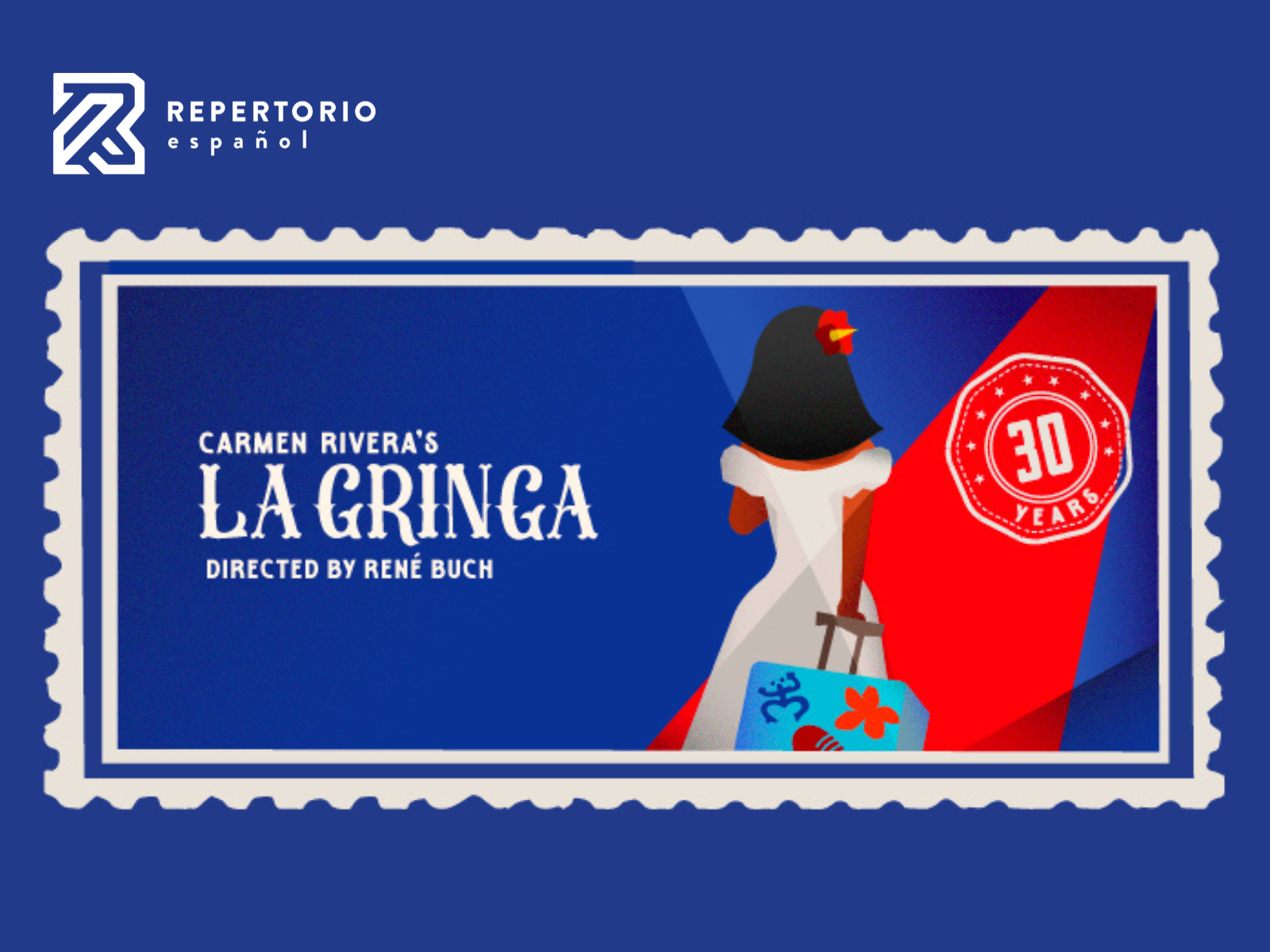
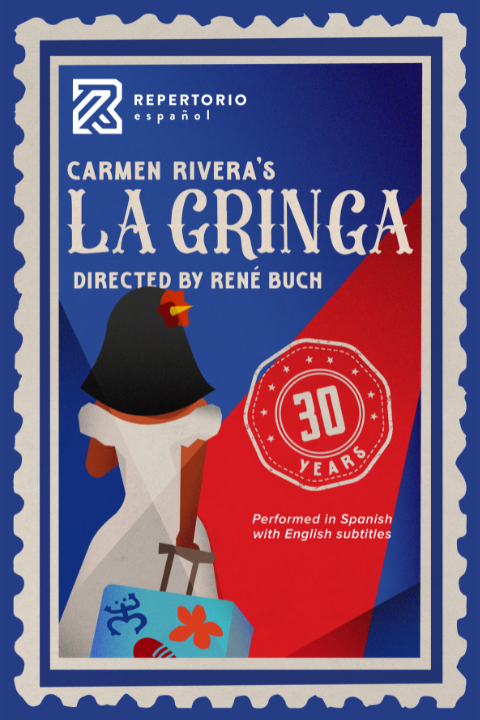
Quick take
- Play
- 1h 45m
- Repertorio Español / Spanish Theatre Repertory
- Ages 12+
- Closes Jun 8, 2027
- Winner of 1 Obie Award
La Gringa showtimes
Schedule last checked Nov 6
No showtimes listed right now. Check the official site or the box office.
Our guide to La Gringa
On this page 10 sections
What it is
La Gringa is a comedy by Carmen Rivera in which a New York-raised woman visits Puerto Rico hoping to find her roots and discovers that belonging has to be negotiated. It has two acts and unfolds at Christmastime in a country house in the mountains near Las Piedras. The first act leans on humor; the second moves toward family feeling and ritual.
Repertorio Español, a nonprofit Spanish-language company, produces it. This staging, directed by René Buch, opened on February 28, 1996, and has stayed in the company's rotating repertory ever since, so it plays on scattered dates alongside other Repertorio productions. The language onstage is Spanish, with English captions.
As of October 2026, Repertorio bills it as the longest-running Spanish-language play Off-Broadway and calls the 2026-27 season its 30th year in repertory. It is an original play, not an adaptation, and Rivera drew part of it from her own life.
The story
María Elena García is 22, raised in New York City, and just out of college with degrees in business and Puerto Rican studies. Instead of a trip to Europe, she spends the holidays with her mother's family in Puerto Rico, hoping to learn where she comes from.
María reaches the family house bubbling with enthusiasm, speaking broken Spanish and photographing everyone. Her uncle Víctor welcomes her; his wife, Norma, is cold from the first moment; her cousin Iris soon tires of the visitor. Her closest ally is Uncle Manolo, Norma's brother, a former actor who has used a wheelchair for years. María's curiosity about music, theater and island traditions gives him new energy.
With Monchi, a neighbor who gave up an engineering scholarship to farm, María and Manolo sneak off to her grandmother's grave and to the El Yunque rain forest, where the Taíno goddess Atabey accepts her.
In the second act the welcome gets harder. A job in San Juan falls through because she is not considered Puerto Rican, and Iris and Norma argue over whether she may call herself boricua. María wonders where she belongs if she is an outsider in both places. Manolo steers her to look inward for the answer. After a long day on Monchi's farm she decides she wants to stay, and Manolo starts matchmaking.
The writing
Rivera wrote the play in English, with only one Spanish-speaking character. After Repertorio took it on, she and Buch translated it into Spanish together. María's Spanish is shaky at first and reaches a basic level by Scene 3. Rivera kept María's struggle with the subjunctive.
Much of the script comes from Rivera's life. Manolo is modeled on her uncle Manuel, who acted in Puerto Rico before moving to New York, and Iris was inspired by a cousin. Her grandmother sang bomba on the island and nearly turned professional, which fed the character of Norma. Like María, Rivera once looked for work in Puerto Rico and was turned down at an interview because she was considered American. Monchi's plan to buy back Puerto Rico acre by acre comes from her earlier play Plastic Flowers.
After a performance in Puerto Rico, Rivera added a line in which a cousin tells María she is boricua as well as a gringa. It went into that night's show and later into the printed script. Rivera shaped María's journey as a series of rites of passage.
The production
Buch had the set rethought in a spare, symbolic style. Wooden panels and white fabric change color under the lighting and carry projected images, so the house and the rain forest are suggested rather than built. The theater also has a Simultext captioning system that gives each audience member a translation.
History
The play began in 1990 as a short piece for two characters, María and Manolo, produced by the Shaman Repertory Theater, a small company started by Tirado and director Gloria Zelaya. Tirado urged Rivera to expand it. She spent about two years on a rough full-length draft in graduate school and kept reworking it in writing groups after graduating in 1993.
In 1995 the play was read in a series that Pedro Monje of Ollantay produced at Repertorio, and Buch and Robert Federico took it from there. The world premiere came on February 28, 1996, as the second play in Repertorio's Voces Nuevas (New Voices) series, created to foster emerging Spanish-language writers in the city.
The production marked its 20th anniversary in 2016. Plans for in-person events around the 25th anniversary in 2021 were put on hold by the pandemic, and while the theater was closed to the public a performance was available to stream on Repertorio en Casa On-Demand. By January 2021, more than 130,000 people had seen it at Repertorio and more than 100,000 more on tour in the Tri-State area, across the United States, in the Caribbean and in South America. For the 30th anniversary, Repertorio held an event on September 11, 2026, and added weekend performances to its 2026 programming.
The Spanish-language production has toured the United States and played festivals in Bogotá, La Paz and Puerto Rico. The English version has been staged in Buffalo, Los Angeles and St. Croix, and by Coachella Valley Repertory in California in March 2015. Concord Theatricals publishes the script in English and Spanish editions.
The ending (spoilers)Contains spoilers. Tap to read
The family makes peace at a parranda, singing bombas together. In the middle of the celebration Manolo dies, leaving María his güiro.
Awards
New Voices at Repertorio Español received a Special Citation in the 1996 Obie Awards, the year the play opened. The citation went to the new-play series in which La Gringa premiered, not to the play itself, although the play is sometimes described as an Obie winner.
Obie Awards: 1 win from 1 nomination
| Year | Award | Category | Result |
|---|---|---|---|
| 1996 | Obie Award | Special CitationNew Voices at Repertorio Español | Won |
Creative team
Carmen Rivera was born in New York City in 1964 to parents who both came from Puerto Rico, and she did not learn Spanish until college. Her other plays include the musicals La Lupe: My Life, My Destiny and Celia: The Life and Music of Celia Cruz, the latter written with her husband, playwright Cándido Tirado.
René Buch directed the 1996 production. He founded Repertorio Español in 1968 with producer Gilberto Zaldívar and was its artistic director. Born in Cuba, he arrived in the United States in 1949 to attend the Yale School of Drama. He received a Drama Desk Award for artistic achievement in 1996 and a Lifetime Achievement Obie in 2011. Buch died on April 20, 2020, at 94, and the company's page still credits him as director.
- Playwright
- Carmen Rivera
- Director
- René Buch
Theater
Repertorio Español / Spanish Theatre Repertory
138 East 27th Street, New York, NY 10016
Open in Apple Maps (opens in a new tab)Open in Google Maps (opens in a new tab)
Questions about La Gringa
How long is La Gringa?
What age is La Gringa suitable for?
Where is La Gringa playing?
When did La Gringa open?
How much are tickets to La Gringa?
Before or after the show
- Museum of Broadway
- Hell's Kitchen food tour before the show
- Empire State Building observation deck
- SUMMIT One Vanderbilt
- Statue of Liberty and Ellis Island ferry
More Off-Broadway plays


Spotted an error on this page? Tell us and we will fix it.